
How Do I Negotiate a Fair Insurance Payout for a Totaled Car?
How Do I Negotiate a Fair Insurance Payout for a Totaled Car?
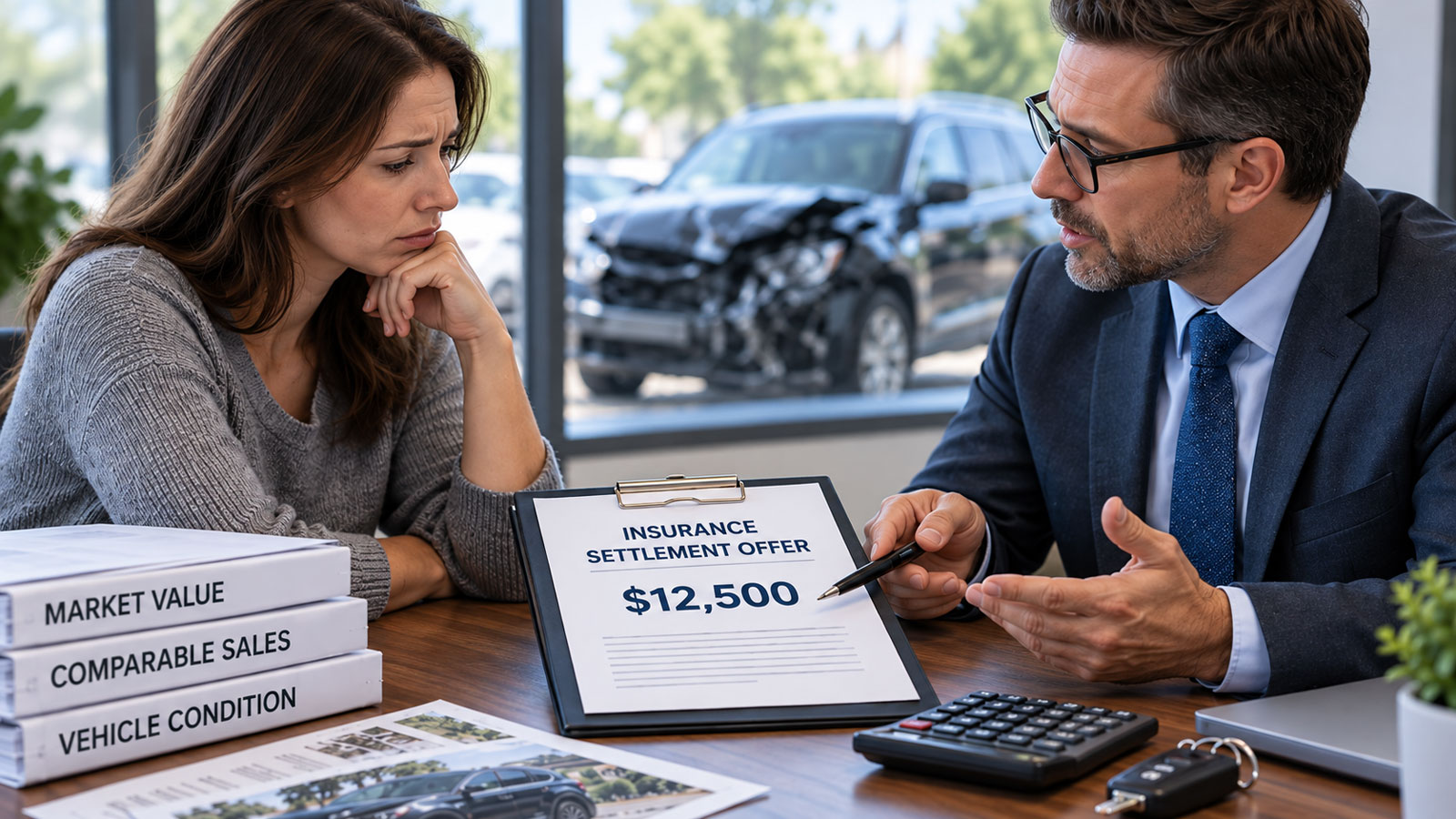
You can negotiate an insurance payout for a totaled car if you believe the insurer's valuation is too low. One easy to overlook “condition rating” in the insurance report could cost you thousands of dollars.
This guide explains how insurers calculate your payout, what factors can reduce your car’s value in the insurance offer, and how to negotiate a fair payout.
Can You Negotiate an Insurance Payout for a Totaled Car?
Yes, you can negotiate an insurance payout for a totaled car. The insurance company's first offer is only a starting point, not a final amount. You have the right to negotiate your insurance settlement and can ask for a higher payout based on evidence.
What you're negotiating is your car's actual cash value - the fair market value immediately before the accident, minus depreciation. This is what a reasonable buyer would pay for your vehicle in your local market the day before the accident.
This guide is intended to give you everything you need to negotiate your claim yourself. We even give you a free report of your vehicle value, so you can make sure you get a fair settlement for your total loss.
The First Thing to Check in Your CCCONE or Mitchell report.
Condition ratings are often arbitrary and labeled "normal," yet insurers apply negative condition adjustments that reduce value by hundreds or thousands.
This is where most claimants get shortchanged, and where almost nobody looks.
For example, a valuation report may list:
- Condition Adjustment: –$450
- Condition Adjustment: –$725
Even when your car is well-maintained, these deductions quietly lower your payout. You should argue for "above average" conditions and challenge any blanket negative adjustments with evidence like maintenance records, photos, and service receipts.
We regularly help vehicle owners recover thousands in additional payout for vehicle owners by reviewing these condition deductions and get insurers to justify or remove them based on an Independent Vehicle Valuation.
We can quickly point out where insurance should be giving you more money.
Have us review your insurance offer or CCCONE report for free.
What Does "Totaled Vehicle" Mean?
A vehicle is totaled when repair costs meet or exceed a percentage of the car's market value, often around 70-80%, this is the total loss threshold depending on state laws. For example, if your 2019 Toyota RAV4 has a pre-accident value of $18,000 and repair costs are $15,000, it may be declared a total loss if your state’s threshold is 80%.
Once totaled, the negotiation focuses on valuation: how much the insurer pays you for the car as it was before the accident. If you keep the salvage vehicle, its salvage value is deducted from your payout, and the car usually receives a salvage title.
How do Insurance Companies Calculate Actual Cash Value (ACV)?
Most policies pay actual cash value (ACV) for a totaled car, or the fair market value minus depreciation. The actual cash value (ACV) is based on the pre-accident condition and market value of your vehicle. Insurance companies typically use third-party valuation systems like CCC, Mitchell, or Audatex. These tools analyze regional sales data for comparable vehicles and apply adjustments for:
- Year, make, model, and trim level
- Mileage at the time of loss
- Options and packages
- Pre-loss condition (interior, exterior, mechanical)
- Accident history and prior damage
- Local market value
While Kelley Blue Book or NADA guides may supplement, the insurer’s valuation report is usually the primary document.
You should request a detailed breakdown from your insurance to see how each factor was scored. This is usually the CCCONE or Mitchell report you might have received from your insurer.
You can upload your CCCONE or Mitchell report here and we will give you a free ballpark appraisal of the vehicle's fair market ACV value.
Which is the fair number insurance should be paying you.
The ACV number is negotiable if any inputs, such as options, mileage, condition, or comps, are incorrect or unfairly adjusted. We will help you with this process if needed.
Step 1: Get the Full Valuation Report and Breakdown From Your Insurance
Request the insurer’s full valuation report, not just the settlement offer letter. This report should include:
- All comparable vehicles used, with prices
- Mileage, options, and location for each comp
- Every adjustment applied: condition, mileage, options, region, prior damage
Ask for a written explanation of how they defined actual cash value. Save this report and highlight every line where value was reduced. These will be your key negotiation points.
You can use this as template email to your adjuster:
Hello [Adjuster Name],
I’m writing regarding my total loss claim for my [Year, Make, Model], claim number [Claim Number].
Before reviewing or accepting the settlement offer, I would like a complete copy of the valuation report used to determine the vehicle’s actual cash value.
Please provide the full report, including:
- All comparable vehicles used in the valuation and their listed or sale prices
- The mileage, options, trim, and location of each comparable vehicle
- All adjustments made to the comparable vehicles or my vehicle
- Any deductions or adjustments for condition, mileage, options, geographic area, or prior damage
- A written explanation of how the final actual cash value was calculated
Please also include any supporting documentation or third-party valuation reports used in determining the settlement amount.
I would appreciate receiving the complete valuation report and breakdown in writing so I can review the basis for the offer.
Thank you,
[Your Name]
[Phone Number]
[Claim Number]
Step 2: Verify Every Detail About Your Car
Check the insurer’s report against your registration, window sticker, or manufacturer build sheet to confirm:
- Correct year and exact trim
- Drivetrain and engine size
- Key option packages (premium, safety, tow, etc.)
- Accurate mileage at the time of the accident
Document every option and improvement, as upgrades can increase your total loss valuation. Gather accident reports and repair estimates to present a full picture of your car's worth.
Step 3: Research Your Car's Fair Market Value Independently
Fair warning: before you can spend hours doing this, insurance will commonly reject self-researched vehicle valuations. We are happy to save you the time and do a ballpark vehicle appraisal for free.
Before countering, get your own fair market value using:
Look for private party or retail values matching your car’s options and mileage in your ZIP code. Also, find comparable vehicle listings on AutoTrader, Cars.com, or local dealer sites. Keep screenshots or PDFs showing dates and locations to prove local market value is higher than the insurer’s offer.
Step 4: Challenge Problems in the Insurer's Valuation
Review the insurer’s comps and adjustments carefully. Look for:
- Non-comparable vehicles (different trims, rebuilt titles, higher mileage, or from different regions)
- Excessive mileage deductions
- Unexplained negative condition adjustments
Request the insurer to justify or remove unfair adjustments. This step often recovers hundreds or thousands of dollars.
Step 5: Build and Present a Solid Counteroffer
Submit a formal counteroffer in writing, including:
- The insurer’s stated ACV
- Your researched fair market value range
- The specific dollar amount you’re requesting
Attach all evidence: valuation screenshots, comparable listings, photos, maintenance records, and a point-by-point critique of unfair comps and adjustments. Keep communication professional and focused on facts.
When Should I Use the Appraisal Clause or Get an Independent Appraisal?
You should invoke the appraisal clause and get an independent appraisal when you believe your insurance offer is unfair. Most policies include an appraisal clause allowing you and the insurer to each hire an independent appraiser if you disagree on value. This process can be faster and less costly than a lawsuit because an umpire resolves ties.
Independent appraisals provide unbiased vehicle value estimates and can strengthen your negotiation position. Insurers may increase offers to avoid appraisal costs. These appraisals can also serve as evidence if disputes escalate.
Total Loss Champions represents owners as their appraiser in appraisal clause proceedings and negotiates on their behalf.
What Else Are You Entitled to Beyond ACV?
Your actual cash value is only part of a fair payout. Depending on state law and your policy, you may also be owed:
- Sales tax on the replacement vehicle
- Title and registration fees
Ask the insurer if these are included and request a breakdown. Vehicle transactions usually incur taxes and registration costs, so these should be part of your settlement.
If your car was repaired rather than totaled, you might also have a diminished value claim for the loss in market value after repairs.
Keeping a Totaled Car, Salvage Value, and Gap Insurance
If you keep your totaled vehicle, the insurer deducts its salvage value from your payout, and the car receives a salvage title. This affects future coverage and resale value.
If you have an auto loan or lease, the lender must agree to salvage retention. Insurance payouts typically go to the lienholder first.
Gap insurance covers the difference between ACV and what you owe. Even with gap insurance, negotiating ACV is important because a higher settlement means more money toward your next vehicle.
See our complete guide to total loss claims for more information.
When the Insurance Company Crosses the Line: Bad Faith and Complaints
Bad faith occurs when insurers unreasonably delay, underpay, or refuse to investigate claims fairly. Signs include:
- Refusing to provide valuation reports
- Ignoring evidence of higher market value
- Long periods without response
Consumers can file complaints with state Departments of Insurance. Serious bad faith may require hiring an attorney for additional damages.
Common Total Loss Negotiation Mistakes
- Accepting the initial offer without reviewing the valuation report
- Assuming "normal" condition means no deductions
- Failing to document maintenance, upgrades, and condition
- Negotiating only by phone without written records
- Not verifying details like trim, options, mileage, and comp locations
- Skipping a second opinion when the offer feels low
- Signing before confirming tax, title, and fees are included
We can help you get the fair insurance payout you deserve.
Don't Sign Anything Until You Know Your Car's Fair Market Value.
Founded by Aaron Castillo, a licensed public adjuster with 20+ years’ experience, Total Loss Champions specializes in total loss and diminished value claims.
We provide:
- Free vehicle value checks to assess your offer
- Detailed reviews of insurer valuation reports to find unfair deductions
- Independent market-value appraisals and negotiation under appraisal clauses
- Full negotiation with insurance carriers on your behalf
There are no upfront fees.
The insurer’s first number is theirs, not yours. Request a free ballpark apprisal to see if your offer is low and get expert help before accepting a settlement that costs you thousands.
Related Articles
Learn everything you need to know about your claim.

Don't Let Insurance Undervalue your Vehicle.
Have Aaron a public adjuster with 20 years of experience evaluate your claim for you.