
What Is Actual Cash Value After a Total Loss?
What Is Actual Cash Value After a Total Loss?
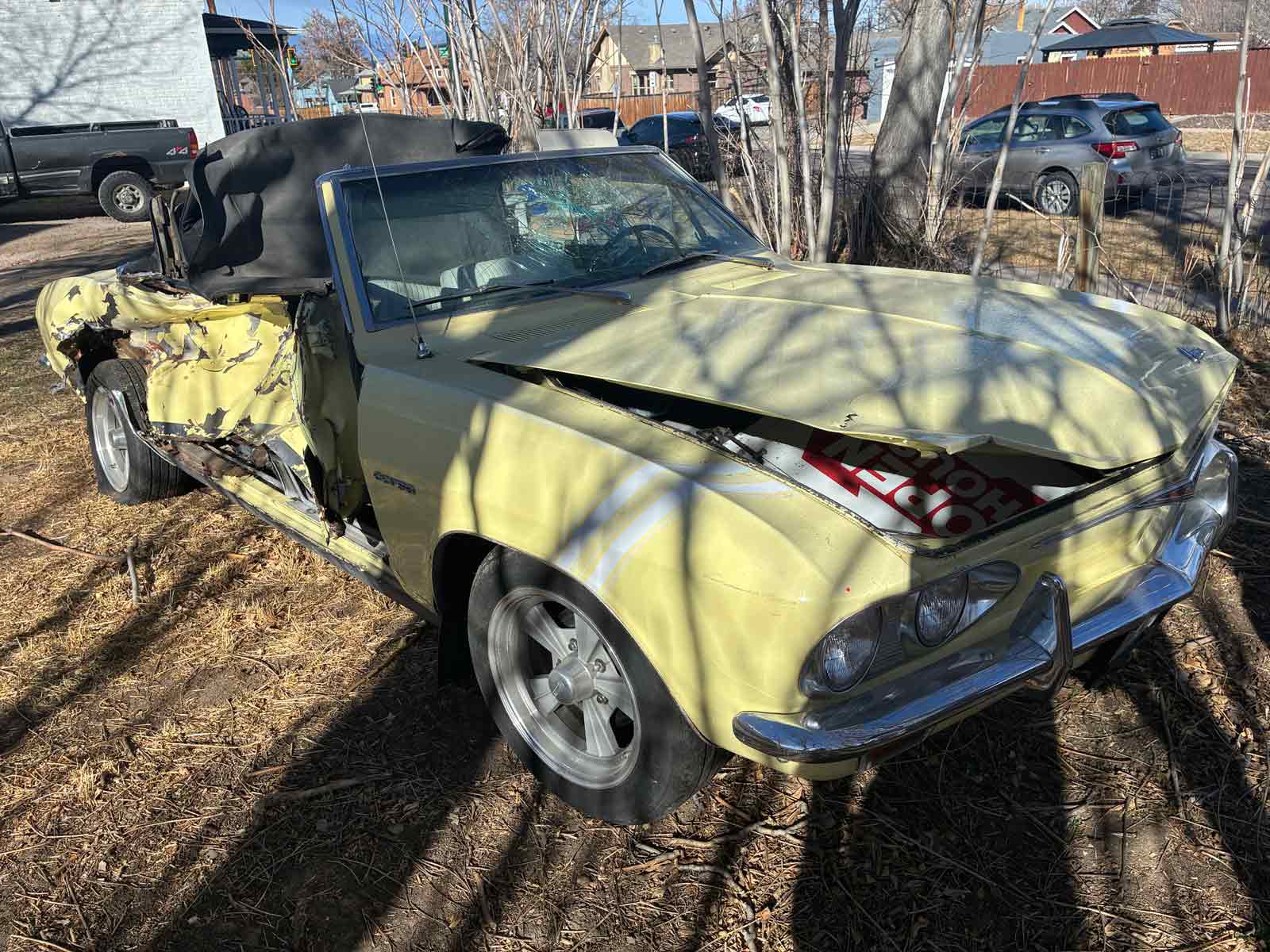
Actual cash value is what a willing buyer would reasonably pay for your vehicle right before the accident in your local market. It reflects depreciation for age, mileage, wear and tear, prior accidents, and local supply and demand.
ACV is almost always lower than the price of a brand-new replacement vehicle from a dealer and often lower than what drivers still owe on their loans. Several factors determine your car’s actual cash value:
- Mileage compared to average for the model year
- Trim level (base model versus fully loaded)
- Optional features and packages
- Documented pre-accident condition
- Prior damage history
- Comparable sales near your ZIP code
Misunderstandings about ACV are a major reason owners feel their settlement offer is unfair. For a deeper breakdown, see our total loss claims guide.
Why the Your Total Loss Offer May Be Too Low
Insurance valuation systems like CCC, Mitchell, and Audatex are designed for consistency and cost control, which sometimes results in undervalued offers.
Common valuation problems include:
- Wrong trim level: Listing an LX instead of an EX-L
- Missing upgrades: Premium audio, navigation, safety packages, recent upgrades like new tires
- Bad comparables: Using vehicles from distant markets or inferior condition
- Excessive condition deductions: Unfair adjustments that don’t reflect how well maintained your car was
- Omitted VIN-specific options: Features that came standard on your particular car
Small line-item errors add up. A 2022 BMW valued by CCC at $48,236 was independently appraised at $54,250, a 12.5% difference worth over $6,000. A 2015 Ford owner recovered an additional $3,308 after review revealed valuation errors.
We will research your vehicle’s fair market value for you.
Our free claim evaluation does all this all for you.
We start by searching vehicle market databases for comparable vehicle listings and give you all the supporting documentation to start contesting a low offer if needed.
Checking to see if your insurance offer is fair can put thousands of dollars back in your pocket.
Learn about the appraisal clause or get a free claim evaluation
How to Review Your Insurance Valuation Report
If you already have a valuation report or total loss offer that doesn’t feel right, here’s how to respond.
1. Ask for the Valuation Report
Request the full written valuation, not just the payout number. You’re entitled to see how the insurer calculated ACV, including all comparable vehicles and adjustments. Save your insurance valuation as a PDF. These reports normally come from CCCONE or Mitchell.
You can have us review your insurance valuation for free using our Total Loss ACV calculator or getting a free claim evaluation.
2. Review the Comparable Vehicles In the Insurance Valuation
Examine each comp used in the report:
- How far away is it? (Should be local)
- Is it the same trim and drivetrain?
- Does mileage align with yours?
- Are condition notes accurate?
Flag any comps that are clearly cheaper models, from farther markets, or in worse condition.
3. Check the Vehicle Details
Confirm the report lists correct VIN details: trim, drivetrain (AWD vs. FWD), and engine type. Verify that options like sunroof, leather, navigation, advanced safety systems, towing packages, or aftermarket upgrades are properly included.
4. Provide Your Insurance Adjuster with The Following Evidence
- Local online listings of similar cars values (our free evaluation gives you a list of compareables)
- Maintenance records proving the car was well maintained
- Receipts for recent major repairs or upgrades
- Clear pre-accident photos showing good condition
This evidence can challenge unfair and inaccurate condition deductions or missing equipment.
Fair warning: don't be suprised if your adjuster rejects your compareables.
5. Push Back in Writing
Send a calm, specific written response outlining errors: incorrect trim, missing options, inappropriate comps, or unreasonable condition adjustments. Written communication creates a clear record and prevents disputes about what was discussed.
If this isn't working for you and your adjuster does't budge you have another option, the apprasial clause.
6. Consider a Certified Independent Appraisal
Our free claim evaluation gives you enough to check if your insurance offer is fair. You may still need a Certified Independent Appraisal to get a fair offer.
If your insurance pushes back or If the gap between the insurer’s offer and fair market value is significant, a certified independent appraisal can be the only way to get a fair offer. The appraisal clause in most policies allows you to request binding revaluation using this appraisal.
Need Help Reviewing your Total Loss Offer? We can do this all for you.
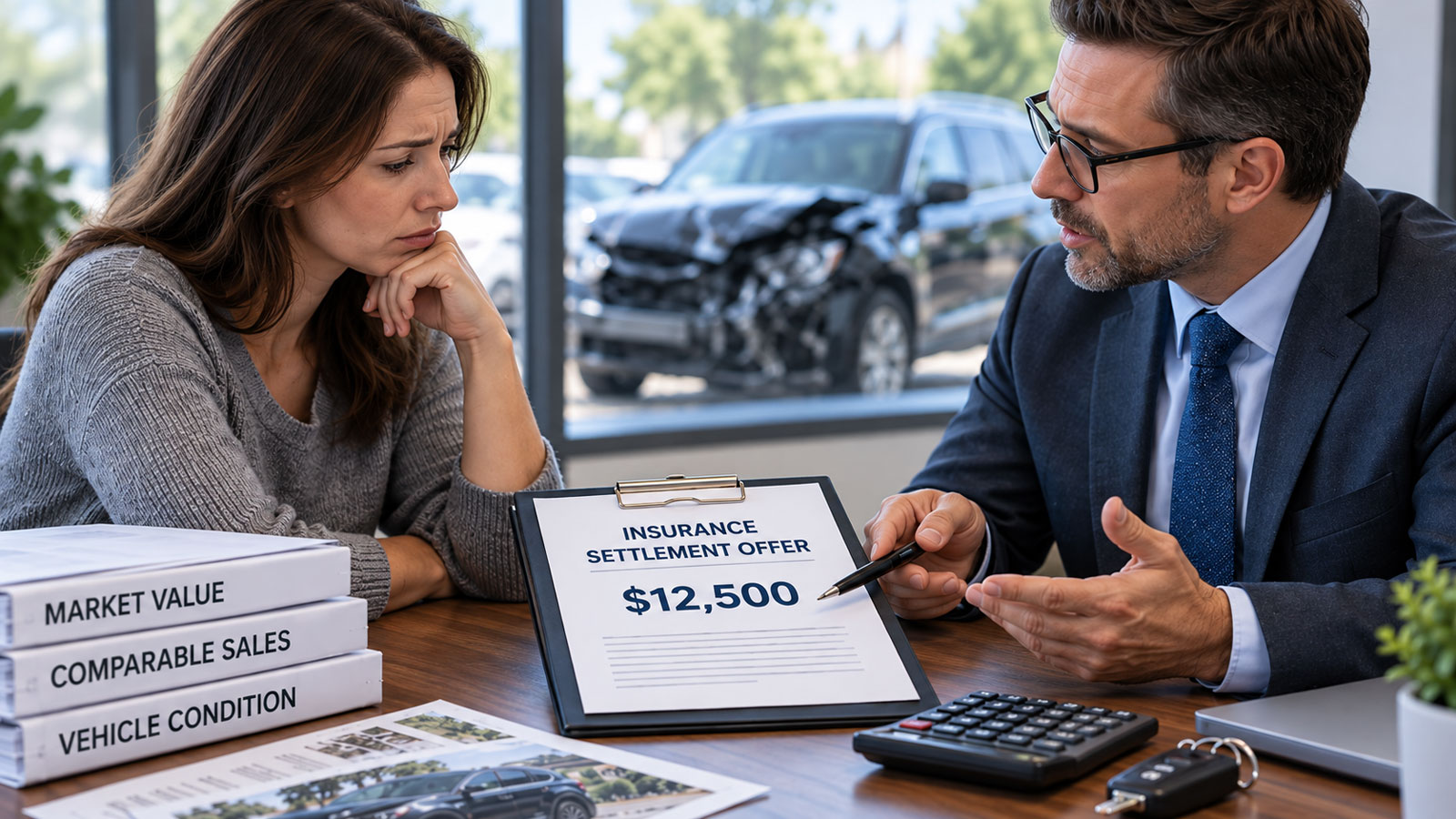
When your car is totaled the key question becomes: Is the settlement offer fair?
Total Loss Champions reviews insurer valuations, identifies ACV errors, prepares independent appraisals using real local market data, and helps vehicle owners use the appraisal clause to get a fair offer.
Start Your Free Claim Evaluation
Want to understand our process first? Learn About Our Total Loss Service
Still researching? Read our full total loss claims guide
Related Articles
Learn everything you need to know about your claim.


Don't Let Insurance Undervalue your Vehicle.
Have Aaron a public adjuster with 20 years of experience evaluate your claim for you.